“Simple problems are hard to solve because they need common sense. Simple problems are made complex. Complex things are solved using patterns. A coefficient is introduced along with a variable to create a pattern. But the coefficient is a constant. To find the coefficient, we again use complex patterns to make it look constant” – Abraham Varghese.
Introduction
I got a bit delayed working on Goblin after working like a machine on my own programming language. I needed a break so wrote a article on simulating brains instead.
I am working on a long-term project to simulate the human brain. It is an ambitious goal, but I am making steady progress. While developing my programming language, I temporarily set this work aside; I have now returned to advancing the simulation.
The aim is to use simulations, genetic algorithms, and AI to create a more accurate model of the chemical changes that drive learning in the brain, down to the individual-neuron level.
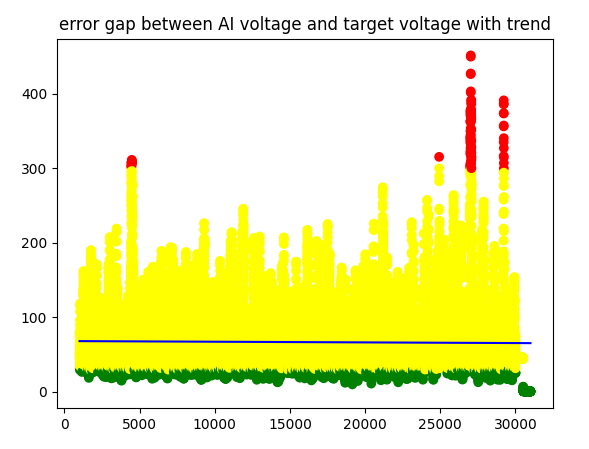
I have made a small improvement to my best-performing AI. The average gap between the simulation and the brain EEG is now just 2.2770979892579057 volts. That is only a fraction smaller than the last best result, but progress.
If you look back through the series, you will see that I use a RAG rating system to assess the simulation. Green indicates that the simulation and EEG are in sync; yellow means the difference is within the accepted noise level; and red suggests that the two may be drifting out of sync.
I also have enough data to start calculating coefficients.
Coefficients
I have not included the values I consider proprietary, nor have I included the intercept. Without the intercept, these values would not meaningfully narrow the search space for anyone attempting to replicate the underlying model. However, they may still be useful to a biologist seeking an estimated direction of change when modelling the chemical changes in neurons associated with learning.
I also sort of want to point to it as evidence for my hypothesis that the brain learns by changing a chemical cocktail of values during learning, and it's not a single value but multidimensional learning.
Learning rates describe the rate of chemical change in response to learning signals. The current model uses two distinct learning signals, although I believe there may be more—possibly three. I would need to revisit the relevant section of the biology text to confirm this.
I initially assumed that the ion channels were voltage-gated: value A would represent the pre-firing state, when the neuron is negatively polarised, while value B would represent the post-firing state. Recent Nobel Prize-winning work in medicine has shown that not all ion channels operate in this way; neurons can also be activated by blue light. This has prompted plans to conduct A/B testing on adaptations of this mechanism, and the insight may also help improve the simulations.
I also explored the biophotonic hypothesis and found it particularly interesting to learn about through recent news coverage.
I have removed the initialisation values, as well as my estimated upper and lower bounds for chemical concentrations, because I have only just begun building those datasets.
GLOBAL_eulher_change_rate : -4.9285625978961315e-06
GLOBAL_C_m_LEARNINGRATE_a : -0.00016833430247769715
GLOBAL_g_Na_LEARNINGRATE_a : -4.969602282017169e-06
GLOBAL_E_Na_LEARNINGRATE_a : 3.2176358537628e-05
GLOBAL_g_K_LEARNINGRATE_a : 4.262205398268345e-05
GLOBAL_g_Ca_LEARNINGRATE_a : -0.0001436726051745654
GLOBAL_E_Ca_LEARNINGRATE_a : 1.311628410228643e-05
GLOBAL_g_Cl_LEARNINGRATE_a : 3.788089000877101e-06
GLOBAL_E_Cl_LEARNINGRATE_a : 9.038392529959482e-06
GLOBAL_E_leak_LEARNINGRATE_a : 1.7757552684529042e-06
GLOBAL_g_leak_LEARNINGRATE_a : 1.3926148731600824e-05
GLOBAL_g_A_LEARNINGRATE_a : -5.5448332099940596e-06
GLOBAL_E_K_LEARNINGRATE1_a : -8.703495661719142e-06
GLOBAL_E_K_LEARNINGRATE2_a : -4.6798044275244e-06
GLOBAL_E_K_LEARNINGRATE3_a : -4.049764925069438e-06
GLOBAL_g_M_LEARNINGRATE_a : 1.386448850785533e-05
GLOBAL_C_m_LEARNINGRATE_b : 2.9667256871041897e-06
GLOBAL_g_Na_LEARNINGRATE_b : -8.288598841358475e-05
GLOBAL_E_Na_LEARNINGRATE_b : 6.711027104347335e-06
GLOBAL_g_K_LEARNINGRATE_b : 2.698001146251824e-06
GLOBAL_g_Ca_LEARNINGRATE_b : -1.3895117839314725e-05
GLOBAL_E_Ca_LEARNINGRATE_b : 6.972373791168331e-06
GLOBAL_g_Cl_LEARNINGRATE_b : 5.625574626308437e-06
GLOBAL_E_Cl_LEARNINGRATE_b : 9.711691255386521e-06
GLOBAL_E_leak_LEARNINGRATE_b : -2.5991269291085206e-06
GLOBAL_g_leak_LEARNINGRATE_b : 9.864282401987832e-06
GLOBAL_g_A_LEARNINGRATE_b : 1.4198748124725381e-05
GLOBAL_E_K_LEARNINGRATE1_b : 1.729507877409139e-05
GLOBAL_E_K_LEARNINGRATE2_b : -5.119460782731445e-06
GLOBAL_E_K_LEARNINGRATE3_b : 5.821223037109764e-06
GLOBAL_g_M_LEARNINGRATE_b : 1.5443338372228634e-05
Conclusion
I am not sure if that is very helpful. But if someone was to reach out and ask for more data for a valid purpose like Alzheimer research I feel happy to release more data and or converse. I might be wrong, but I think it ought to give a rough estimate for a biologist or neuroscientist to know the quantity and rate of changes by the rough estimate. If I am wrong on that then contact me. If you show good reason to have the full data, I will supply.
It is probably more a cool project rather than changing science. The issue is it's not really easy to compare the data without live data, and that being said.
The data set is about 60k simulations with the ability to analyse which variations would become more unstable over time and which seem chemically stable. It's quite a rich data set.
I am particularly keen to see if the experiments make use of reading live EEG data and to see the amount of information that might pass into the AI simulation. I would also be interested in how this simulation quantifies chemical changes and how they could be applied back into biology and help estimate changes between healthy brains and brains with dementia.
If someone has any interest in such a partnership, please let me know.
I should be able to use the coefficients to speed up evolution by reducing the random changes done by the genetic algorithm by using the coefficients to estimate how big and in what direction of change to make to the population.
The model is currently being applied as a trading simulator to see practical effects.s There does seem to be credence to my idea that it's a complex cocktail of chemical changes. I also started a longer-term model that tracks an EEG over greater time and one that tries to sync to firing so it works like a large language model.
I estimate it will take me a year or two with my current limited compute, but it probably will take me a year or two to write Goblin, and so it's all roughly. If completed, that would be a different way of doing attention that would be similar to our own brain.
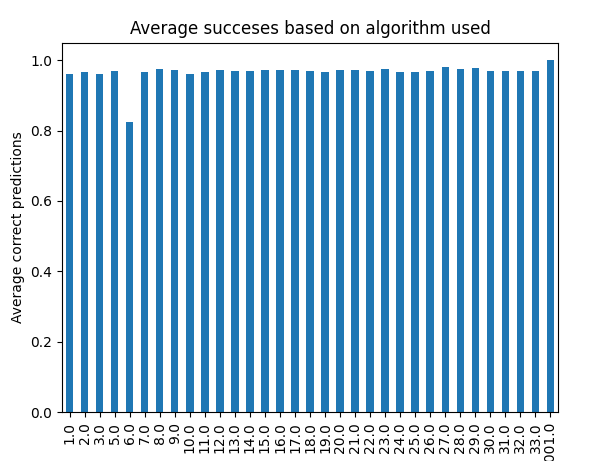
The current winning algorithm 9001 is an AI-aided optimiser that changes the coefficients and weights in the chemical model. Different chemical cocktails do seem to change performance.
Currently the best models in the trader category sometimes are very performative but generally a lot trade a bit then stop my inference is they know they are going to lose and or the wrong side of a trade but I do not know.
Add comment
Comments